
Floors
Four kinds of slab. The same ground-in flake system on every one.
What changes between a garage, a barn and a basement isn't the coating — it's the condition of the concrete underneath and how much preparation it needs before anything goes down.
01 — Garage floors
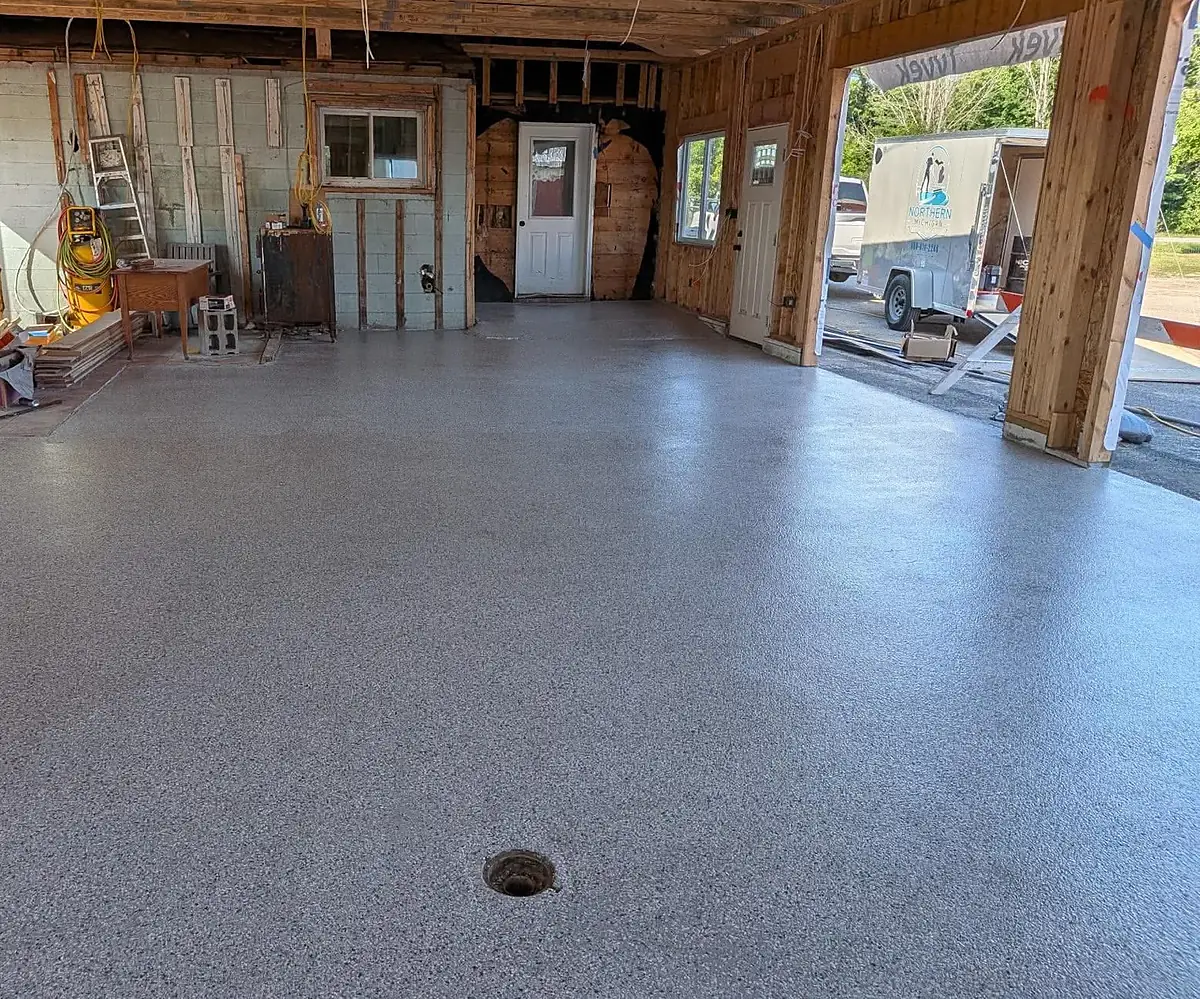
The floor that takes the salt off your truck.
A Northern Michigan garage slab has the hardest life of any concrete on the property. Wheels come in loaded with road brine, it melts, it sits in the pores, and then the temperature drops through freezing and back again more times in a season than most people count. That cycle is what lifts the surface off in flakes and opens the cracks up wider each year.
Most garage work is a retrofit over concrete that has already been through some of this. The slab gets ground back to sound material, damage gets addressed while the floor is open, and the flake system goes down over the top — so what the salt meets from then on is a sealed, closed surface that hoses off.
02 — Pole barn & shop floors
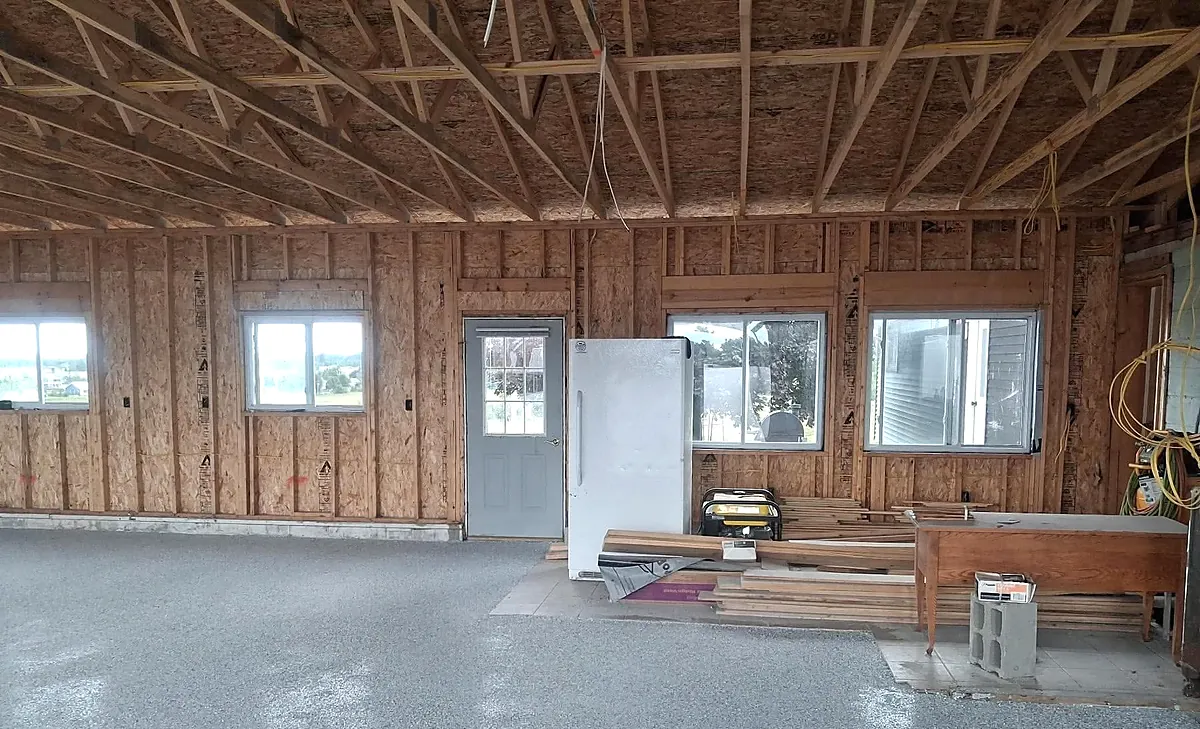
Best done before the walls close in.
New pole barns and detached shops are the easiest floors we do, and the cheapest to get right, because the building is still open. Nothing has to be emptied, moved or masked off, the grinder can run the full span, and the slab is clean concrete that has never had oil or road salt into it.
These are working floors, so they get the same treatment as a garage rather than a lighter one: full mechanical prep, flake broadcast right out to the edges, and a clear coat over the top that takes a dropped tool and a dragged length of lumber without marking.
03 — Basement floors
Cottage basements and year-round basements.
An uncoated basement slab is a dust source. Bare concrete sheds fine grit continuously, it holds whatever gets spilled on it, and it never really comes clean because there is nothing to clean — the dirt is in the surface, not on it.
Sealing it closes the slab so the floor mops instead of absorbing, and the flake finish hides the unevenness that basement concrete usually has. The prep matters more down here than anywhere: an old basement floor needs checking for moisture coming up through the slab before a coating goes anywhere near it, and that is part of looking at the job.
Straight answer
We haven't put a basement photograph on this page yet.
Every picture on this site is a floor we actually put down, and we would rather leave a gap than show you a barn and call it a basement. There will be one here when there is one to show.
04 — Flake finishes
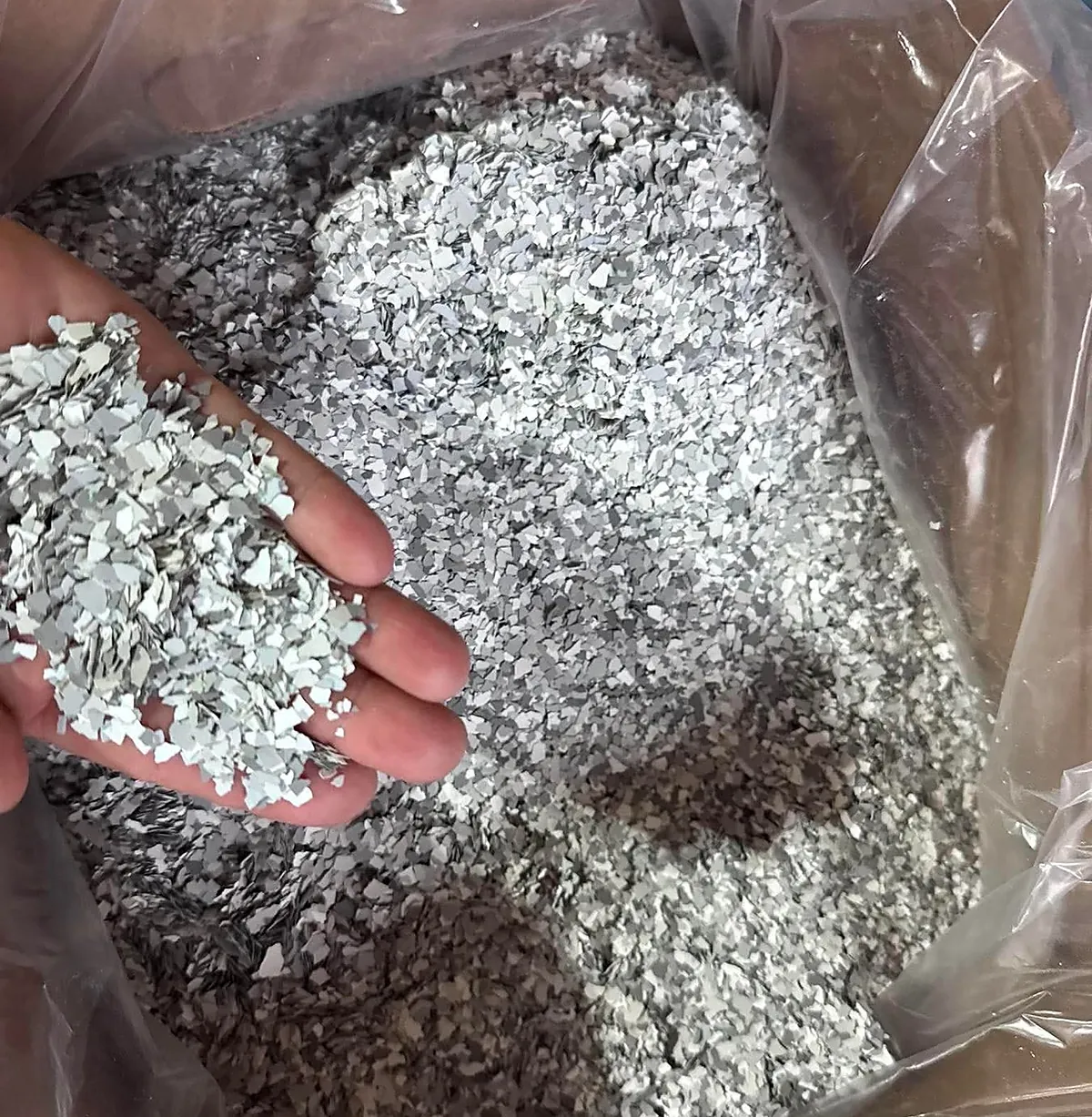
Grey, white and black, with pale blue running through it.
This is the actual blend that goes down on these floors — vinyl chip, broadcast by hand into wet resin until the surface will not take any more, then scraped back flat and locked under a clear coat.
It is a cool, quiet floor rather than a showy one. No metallic swirl, no poured-marble effect. The flake does practical work as well as visual: it hides tyre marks and dropped-oil shadows the way a flat colour never will, and the texture it leaves gives the floor grip when it is wet.
- Grey
- White
- Black
- Pale blue
Not sure which one you've got?
Send a photo of the slab and a rough measurement. That is usually enough to say what it needs.